

Scholasticism
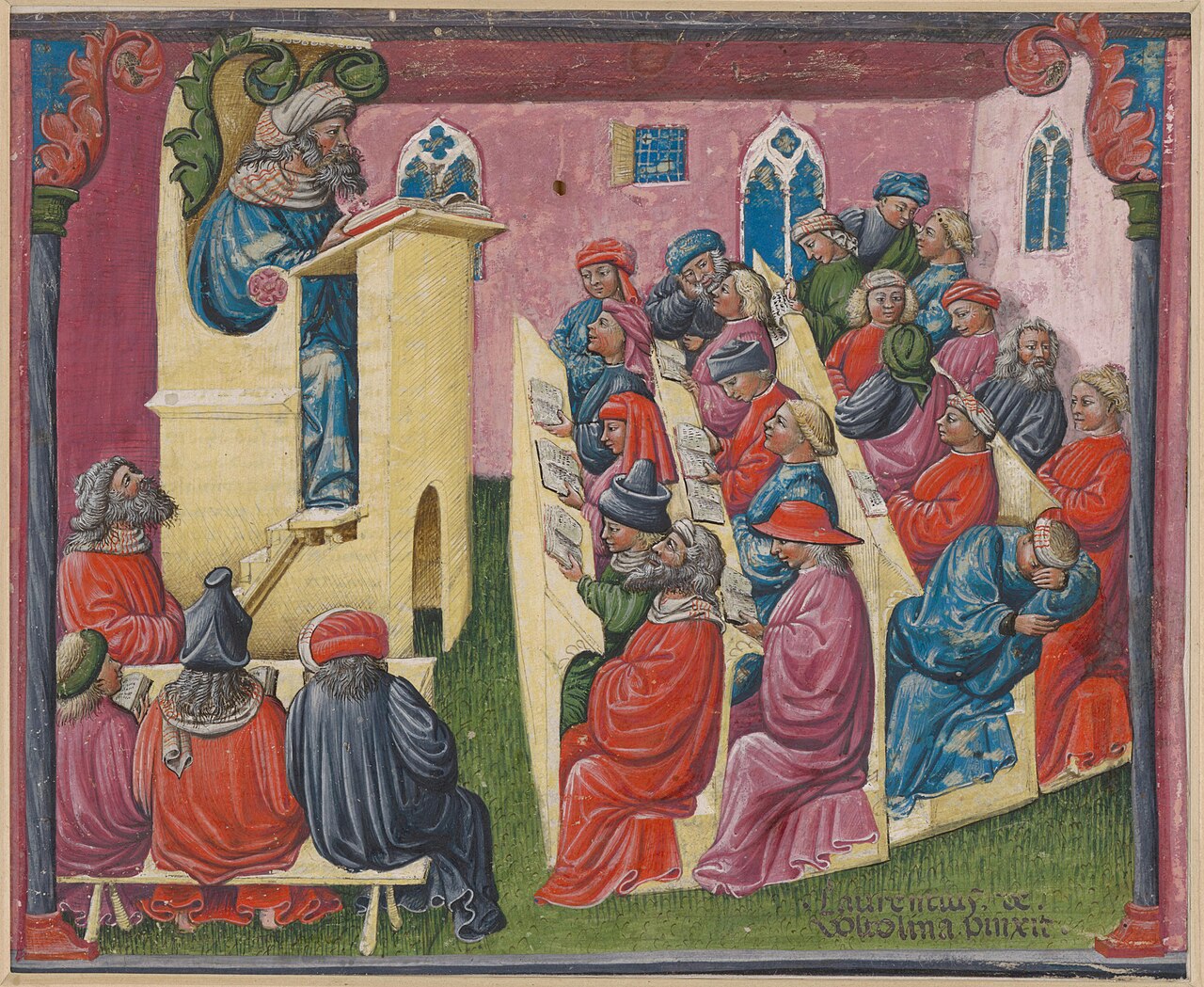
Aside from shame, spoils, and infectious diseases, the Crusaders brought back something else: infections of the mind. Many a Christian found it difficult to come to terms with the fact that other faiths (heretics of past and present, Jews and Muslims) were capable of generating morally exemplary men like Maimonides and Saladin. It was a disturbing revelation to many; comparative religion does religion no good. More importantly, the exchange of ideas through books that flowed from the Arab world changed everything. Christianity was now introduced to Aristotle and other Greek philosophers that had disappeared from the West—via Averroes, Avicenna, Maimonides, and others—and it was forced to fight reason with reason. Scholastic philosophy was inaugurated as an attempt to create a rational defense of the Christian faith… It was a trojan horse concealing a thousand hostile elements. Between the days of Innocent III and Boniface VIII—through men like Abélard, Thomas Aquinas, and Roger Bacon—the paralyzing power of the Church was to be slowly and inadvertently eroded.
Source: Durant, Will. The Story of Civilization, Vol. 4: The Age of Faith, A History of Medieval Civilization, Christian, Islamic, and Judaic, From Constantine to Dante, A.D. 325-1300. New York: Simon and Schuster, 1950.
Public Domain
Back to archive
Full disclosure, I may occasionally borrow a sentence from Will Durant's Story of Civilization. I absolutely love that collection!