

Innocent III
On January 8, 1198, Innocent III was unanimously chosen pope. He was the best mind of his time. His pronouncements as Pope were characterized by a clarity and logic of thought that would have made him a renowned philosopher had he chosen that humble profession. Similarly, had he been born to state power, he would have made an unrivaled king. Instead, he became the most powerful pope in history. He extended his power in Germany by supporting Otto IV against Philip of Swabia, then Philip against Otto, then Otto against Frederick II, then Frederick against Otto—in each case exacting concessions to the papacy as the price of his favor, and freeing the Papal States from the threat of encirclement. Through this astonishing succession of vital conflicts he reduced the potentates of Europe to an unprecedented recognition of his sovereignty, and gained so much power, that a Byzantine visitor to Rome described Innocent as “the successor not of Peter but of Constantine.” But, alas! We need not to forget his failures (the fourth and fifth crusades) nor his injustices (wiping clean the debts that Christians had accumulated from Jewish lenders, to fund said crusades). Nonetheless, when he died (1216) the Church had reached a height of organization, splendor, repute, and power which she had never known before, and would only rarely and briefly know again.
Source: Durant, Will. The Story of Civilization, Vol. 4: The Age of Faith, A History of Medieval Civilization, Christian, Islamic, and Judaic, From Constantine to Dante, A.D. 325-1300. New York: Simon and Schuster, 1950.
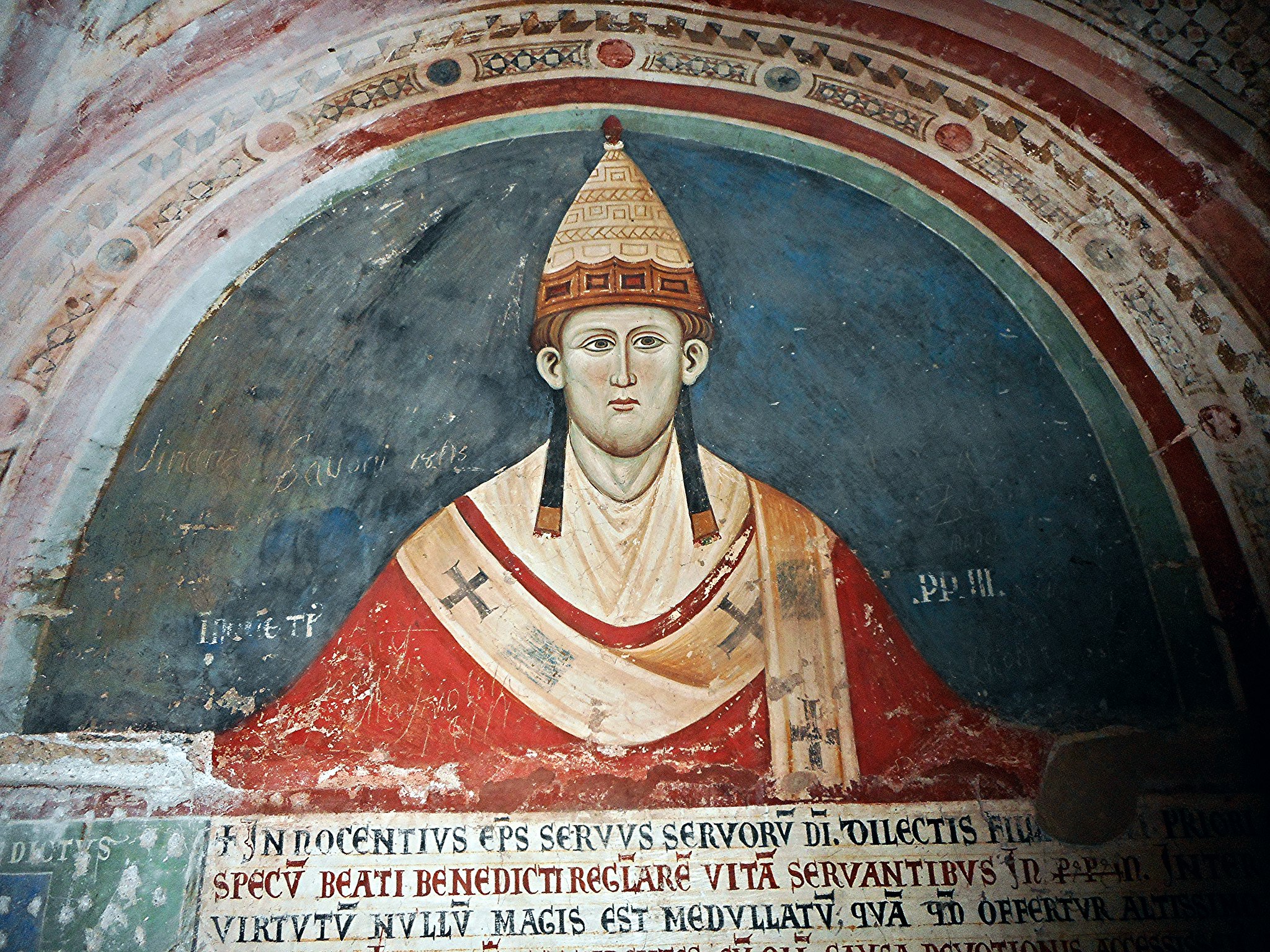
Image by Carlo Raso under Public Domain
Back to archive
Full disclosure, I may occasionally borrow a sentence from Will Durant's Story of Civilization. I absolutely love that collection!