

Hammurabi
In 1810 BCE, Hammurabi, the semitic king of Babylon, invaded the areas of Uruk and Isin. Twenty years later he invaded Elam, captured its king, established his sway over Arnor and distant Assyria, and built an empire of unprecedented power. Shortly after his conquests, order and security were achieved by Hammurabi’s historic code of laws. The code is composed of 285 laws arranged almost scientifically under the headings of Personal Property, Real Estate, Trade and Business, the Family, Injuries, and Labor. It forms a code more advanced and civilized than that of Assyria a thousand and more years later, and in many respects “as good as that of a modern European state.” That is the famous code of Hammurabi. Here’s a selected excerpt from its prologue:
“At that time the gods called me, Hammurabi, the servant whose deeds are pleasing, . . . . who helped his people in time of need, who brought about plenty and abundance, . . . . to prevent the strong from oppressing the weak, . . . . to enlighten the land and further the welfare of the people.”
After Hammurabi, the Sumerians would never re-take their land, and the semitic people would rule the Land Between the Rivers until the rise of Persia ended the Neo-Babylonian empire.
Source: Durant, Will, The Story of Civilization, Vol. 1: Our Oriental Heritage, A history of civilization in Egypt and the Near East to the Death of Alexander, and in India, China, and Japan from the beginning. New York: Simon & Schuster, 1954.
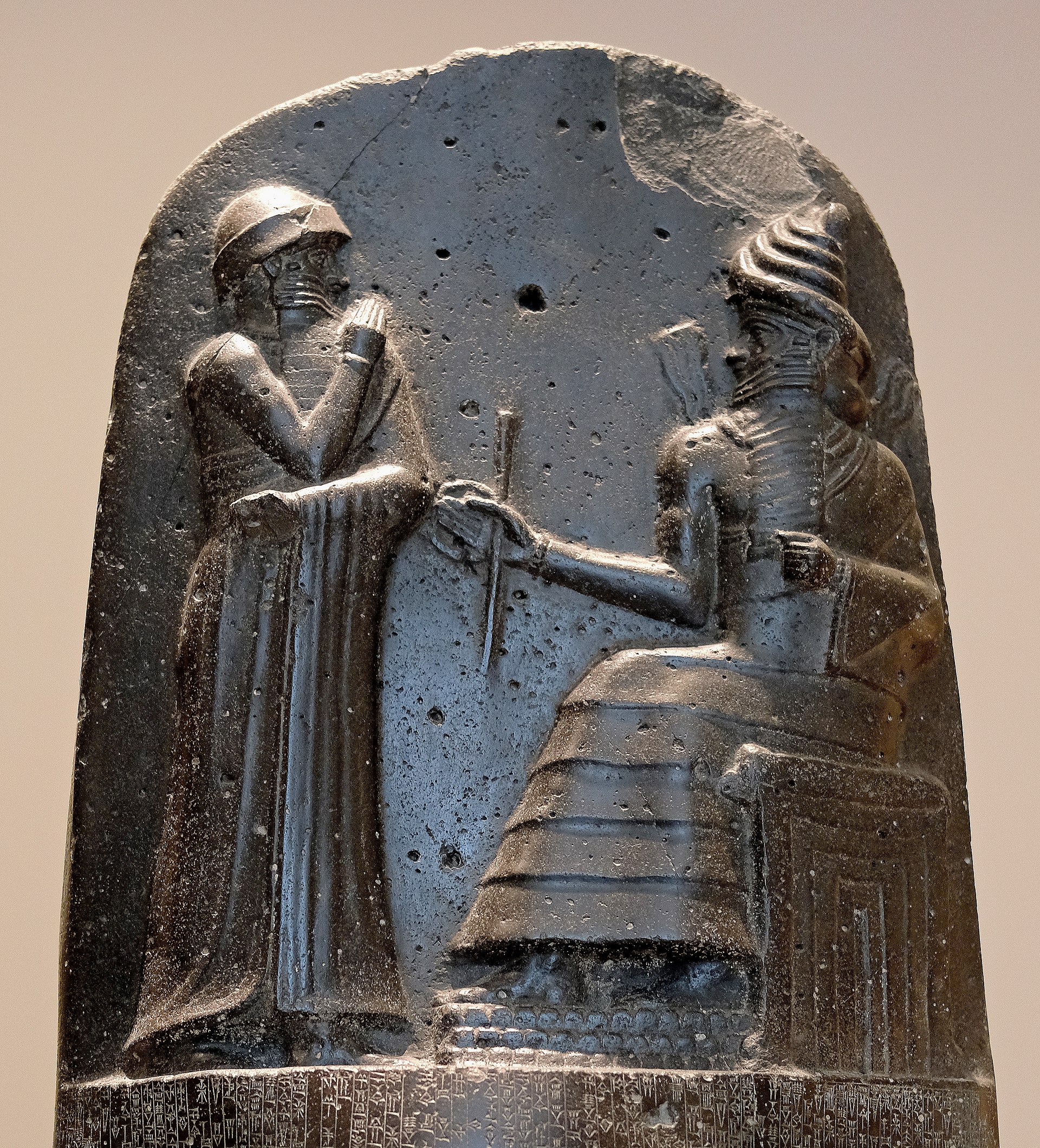
Image by Mbzt under CC BY 3.0 license
Back to archive
Full disclosure, I may occasionally borrow a sentence from Will Durant's Story of Civilization. I absolutely love that collection!