

Epicurius
Epicurius was born on the island of Samos in February, 341 BCE. He and Zeno of Citium own the badge of honor for formulating the two most lasting philosophies in history, Epicureanism and Stoicism. Epicurus studied in Pato’s Academy, and later established a school of his own. Unlike the Academy, Epicure made no distinctions of class or race; he accepted courtesans as well as matrons, slaves as well as freemen; his favorite pupil was his own slave, Mysis. Like Francis Bacon he preferred Democritus to Plato and Aristotle, and took from him many bricks for his own construction. He taught and lived simply, was prudently private, and admonishes us to "lathe biosas"—live unobtrusively. His pupils looked upon him, says Seneca, as a god among men; and after his death their motto was: “Live as though the eye of Epicurus were upon thee.” He wrote three hundred books, but only a handful of letters were handed to us, together with fragments of his central work, On Nature. He disliked religion because, he thought, it thrives on ignorance, promotes it, and darkens life with the terror of celestial spies, relentless furies, and endless punishments. He also rejected metaphysics. All the problems that Locke and Leibnitz were to debate two thousand years later are here settled with one sentence: if knowledge does not come from the senses, where else can it come from? Not having access to the instruments of modern science inevitably led his approach to much speculation, therefore his most lasting legacy is not in science, but in Philosophy and virtue. “It is not possible to live pleasantly without living prudently, honorably, and justly; nor to live prudently, honorably, and justly without living pleasantly.” He sees philosophy and wisdom as the only liberator from this mortal destiny; and simple pleasures as the means to cope with our insignificance. “Everything natural is easily procured, and only the useless is costly.” For thirty-six years Epicurus taught in his garden—preferring a school to a family—and then, in the year 270 he developed a kidney stone, bore the pains stoically, and on his deathbed found time to think of his friends:
“I write to you on this happy day which is the last of my life. The obstruction of my bladder, and the internal pains, have reached the extreme point, but there is marshaled against them the delight of my mind in thinking over our talks together. Take care of Metrodorus' children in a way worthy of your lifelong devotion to me and to philosophy.”
In Metrodorus of Lampsacus (his pupil), the most Epicurean of sentences took form: “all good things have reference to the belly.”
Source: Durant, Will, 1885-1981, The Life of Greece: A history of Greek government, industry, manners, morals, religion, philosophy, science, literature and art from the earliest times to the Roman conquest. Simon and Schuster, 1939.
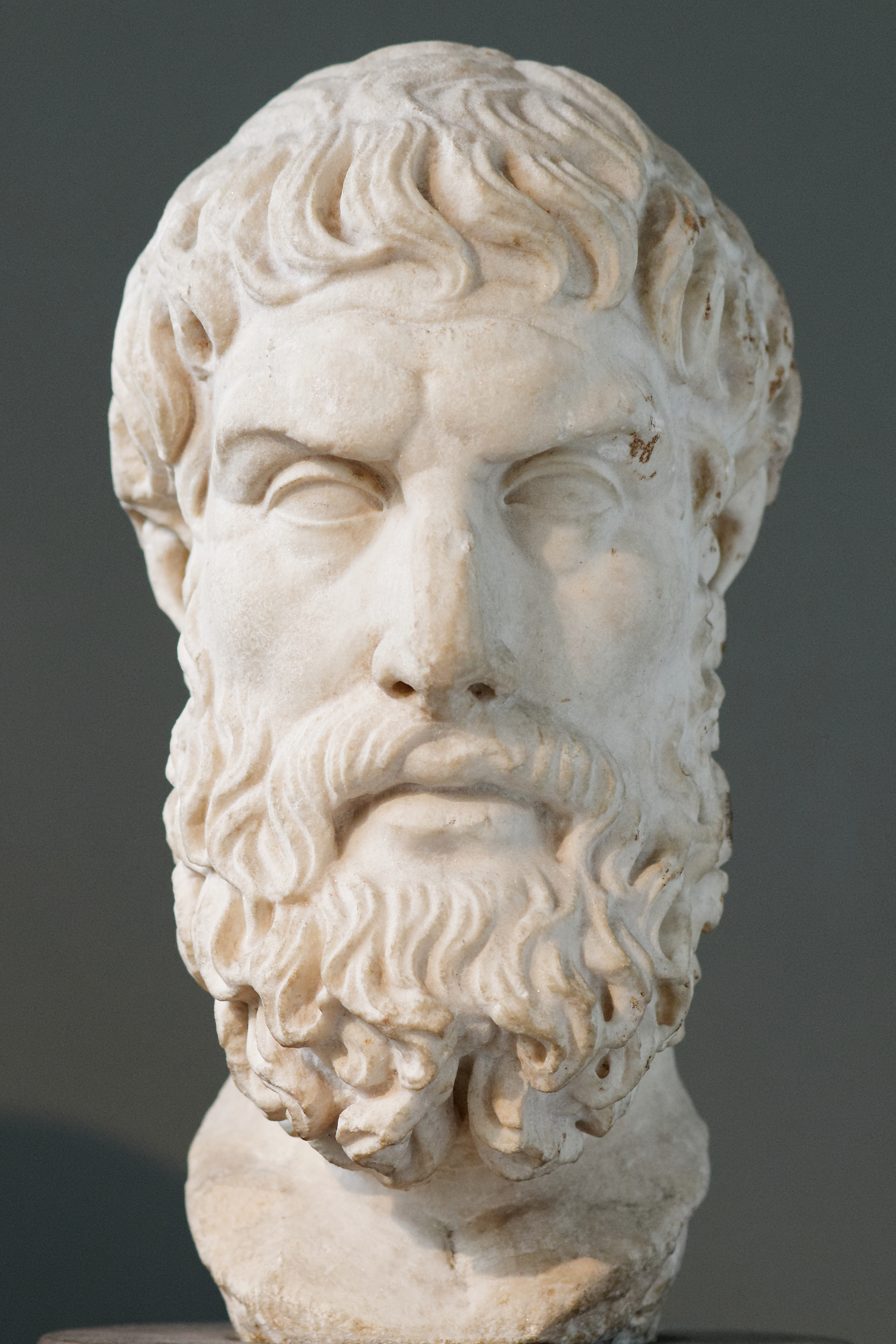
Public Domain
Back to archive
Full disclosure, I may occasionally borrow a sentence from Will Durant's Story of Civilization. I absolutely love that collection!