

Plato
Plato, born around 428 BCE, came from a family so ancient that on his mother's side his pedigree went back to Solon, and on his father's side to the early kings of Athens, even to Poseidon himself. He excelled in his studies of music, mathematics, rhetoric, and poetry; had such a robust frame and athletic build that he earned the nickname Platon (i.e. broad). At age twenty, he succumbed to the fascination of Socrates. He burned his own poems, forgot Euripides (the best dramatist of the age), athletics, and women, and followed the master as if under a hypnotic spell. After Socrates’ death (399) and the chaos that consumed Athens, he fled, and didn’t come back for thirteen years. Once back in Athens, he founded the Academy; a university that was destined to be the intellectual center of Greece for nine hundred years. Over the portal was a warning inscription—medeis ageometretos eisito—“Let no one without geometry enter here”. Plato served mathematics well. He redefined the point as the beginning of a line, formulated a rule for finding square numbers that are the sum of two squares, and invented or developed mathematical analysis by proof. As he grew older, he became more metaphysical, and was obsessed with the purity of the soul and the belief in reincarnation—ideas that would have a major influence in Christian philosophers and in the evolution of Islam. Later, perhaps tired of imagining the afterlife and the invisible, he turned more towards morals and politics, “The greatest and fairest sort of wisdom by far is that which is concerned with the ordering of states and families”. Adding that morally “the highest good ... is the power or faculty … of doing all things for the sake of truth”. Later still, he became incapable of seeing any beauty apart from goodness and truth; claiming music and the arts must be banned if they display unpatriotic or irreligious themes. Even Homer had to go. But his interest in the affairs of man never died. His most famous work, Republic, lays the blueprints of an utopia where a philosopher-king would lead the people and where there would be no laws. All cases and issues will be decided by the king according to a wisdom untrammeled by precedent. What started as a noble idea, became a dictatorship even on paper. In a surprising twist, he himself, who started as someone who loved philosophy more than he loved any woman or any man, concluded with suppression of all free reasoning—a conviction that philosophy must be destroyed in order that man may live. He would have been the first victim of his Utopias.
Source: Durant, Will, 1885-1981, The Life of Greece: A history of Greek government, industry, manners, morals, religion, philosophy, science, literature and art from the earliest times to the Roman conquest. Simon and Schuster, 1939.
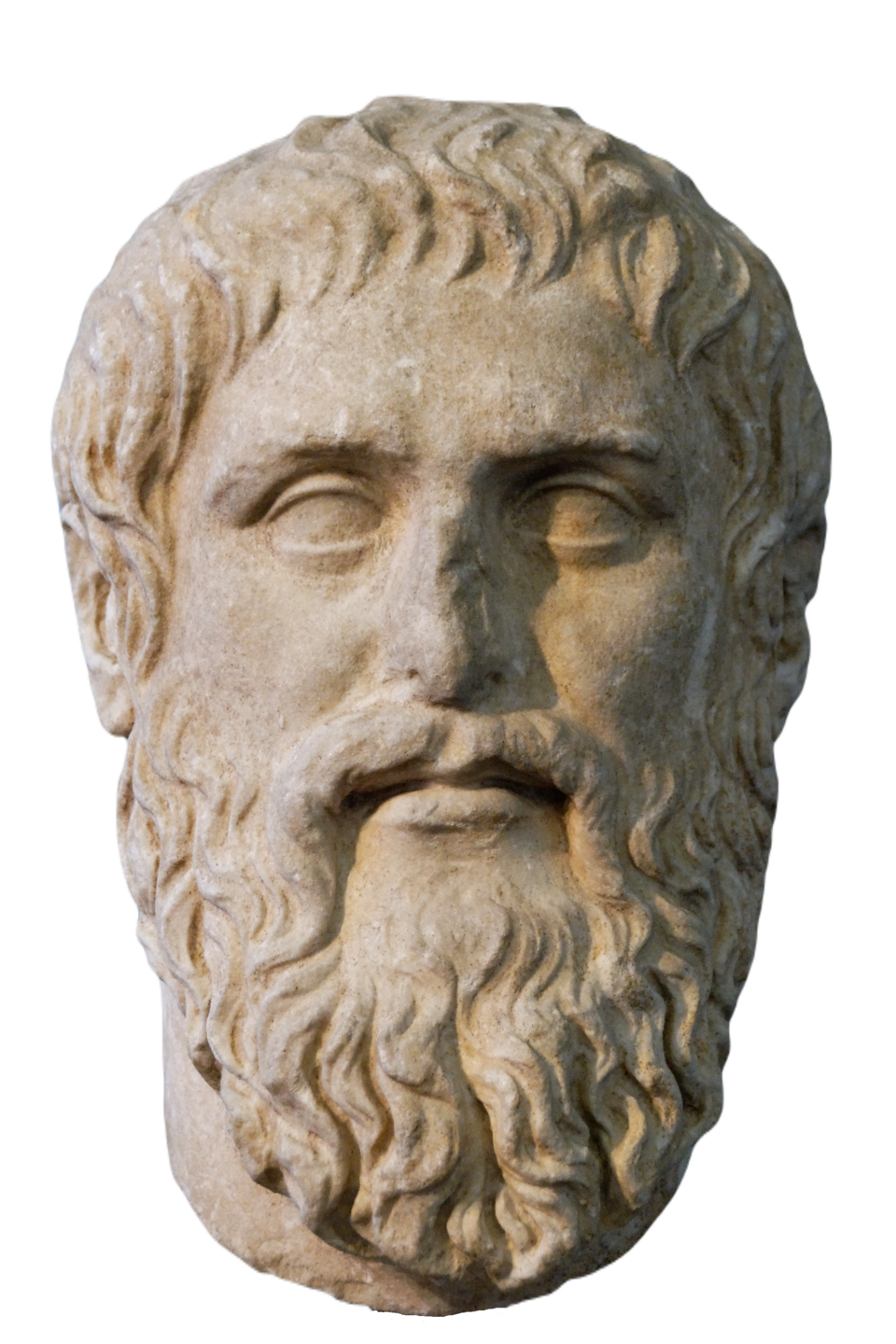
Public Domain
Back to archive
Full disclosure, I may occasionally borrow a sentence from Will Durant's Story of Civilization. I absolutely love that collection!