

The Xia Dynasty
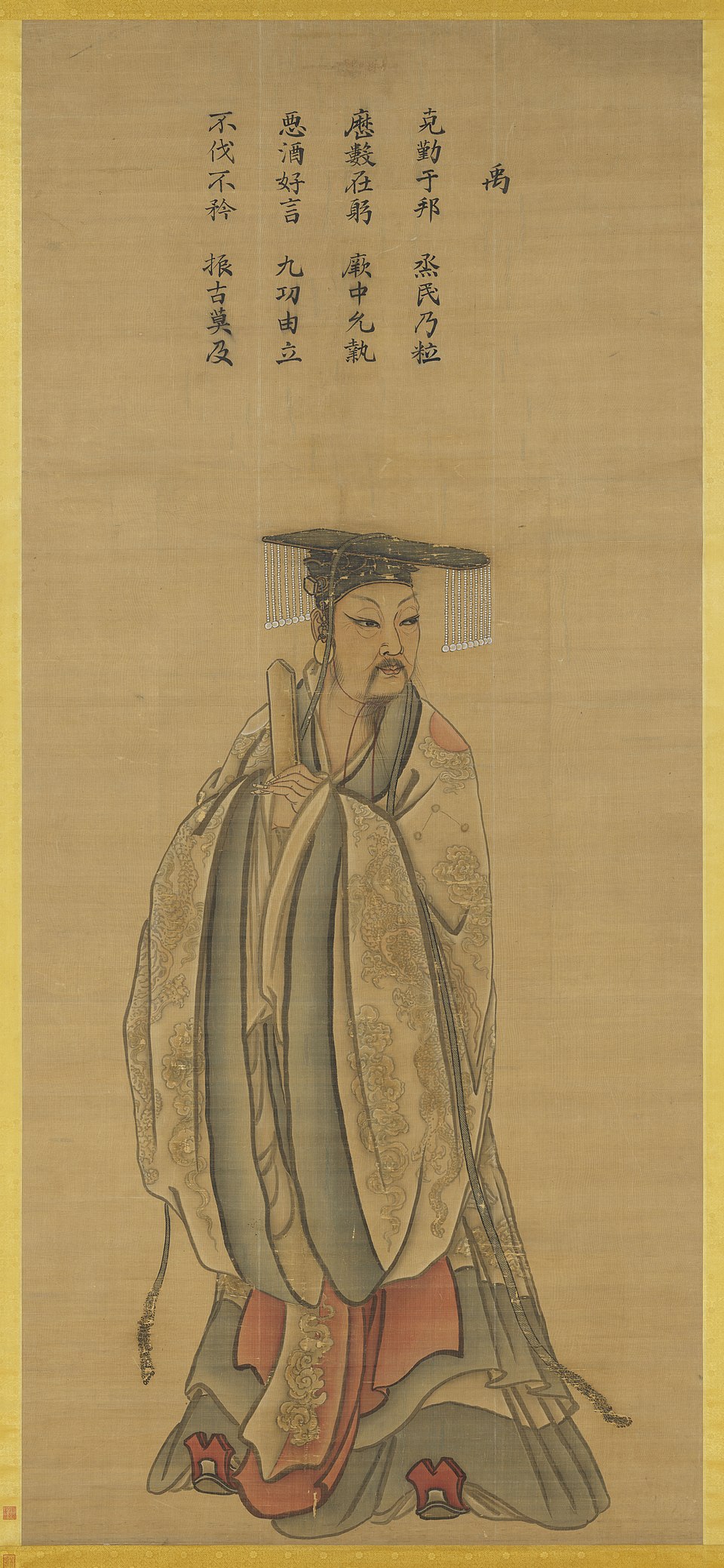
There were five emperors that followed in the footsteps of the great Fuxi. The last of the five was Emperor Shun, the model of filially devoted sons, the patient hero who fought the floods of the Hoang-ho, the savant who improved the calendar, standardized weights and measures, and endeared himself to scholastic posterity by reducing the size of the whip with which Chinese children were educated. Chinese tradition tells us that in his old age, circa 2205 BCE, Shun raised to a place beside himself on the throne the ablest of his aides, the great engineer Yü, who had controlled the floods of nine rivers by cutting through nine mountains and forming nine lakes. Yü was a great man, and he ruled ably. “But for Yü,” say the Chinese, “we should all have been fishes.” His tragic blunder was the same as that of all proud fathers who have ascended to some throne against all odds: he rejected the principle of succession by royal appointment and established the Xia (i.e., “civilized”) Dynasty by making the throne hereditary in his family. With it, Yü unleashed a line of seventeen idiots alternated with mediocrities and geniuses in the government of China for 439 years. Then, this dynasty was brought to an end by the whimsical Emperor Jie, who amused himself and his wife by compelling three thousand Chinese to jump to their euthanasy in a lake of wine. China entered a dark age until the Zhou Dynasty came along
Source: Durant, Will, The Story of Civilization, Vol. 1: Our Oriental Heritage, A history of civilization in Egypt and the Near East to the Death of Alexander, and in India, China, and Japan from the beginning. New York: Simon & Schuster, 1954.
Public Domain
Back to archive
Full disclosure, I may occasionally borrow a sentence from Will Durant's Story of Civilization. I absolutely love that collection!