

Electrical intensity and amount
As the 18th century advanced, further connections between natural and man-made electricity were being made. In England, Henry Cavendish, a pathologically shy aristocrat, was studying the Torpedo Marmorata (an electric ray found in the coastal waters of the eastern Atlantic Ocean). He had heard from friends that the sting of this ray felt surprisingly similar to that of a Leyden jar’s discharge—but without the spark. Guided by the literal thinking of the early enlightenment era—full of analogies and raw simplicity—Cavendish decided to make a fish-shaped Leyden jar and buried it under a sandbox filled with water. But unlike the fish, the jar always sparked. In trying to explain the difference, Cavendish made a brilliantly innovative contribution by suggesting there was a difference between “intensity” and “amount” of electricity. He noticed that the sparks would fly the same distance whether it came out of a single jar, or multiple jars in parallel, deducing that these must have the same “intensity”, but because the shock was much greater, it must have a larger "amount" of it. In the case of the fish (with virtually no spark), he concluded, the intensity was very low, but the amount much higher. He was spot on, and his descriptions later became what we know today as voltage and current. He published this work in 1771.
Source: Shock and Awe: The Story of Electricity. Presented by Jim Al-Khalili, BBC, 2015.
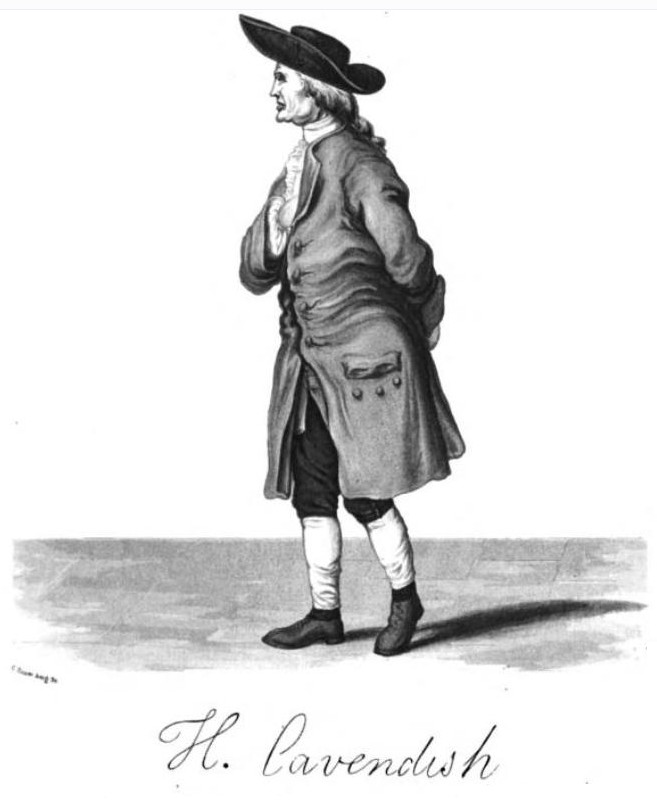
Public Domain
Back to archive
Full disclosure, I may occasionally borrow a sentence from Will Durant's Story of Civilization. I absolutely love that collection!