

The Leyden Jar
The Leyden Jar was one of the most significant inventions of the 18th century. It was the discovery of Pieter van Musschenbroek, and was named after the city in which it was discovered, Leiden, Holland. Funny enough, the principle behind this electrical device was literally sparked by simple human blunder. Van Musschenbroek was a professor at the University of Leiden, and in 1745 he had begun to think quite literally about electricity. Perhaps inspired by the “flow” described by Grey’s swing, van Musschenbroek thought he could store this “fluid” by replacing the boy with a jar full of water. In January of the next year, he put the jar on an insulator, dipped one end of a wire in the water, and connected the other end to a Hauksbee sphere. However, try as he might, the electric fluid wouldn’t stay in the jar. One day, by mistake, he began "filling" the jar while still holding it in his hands. As he reached with his other hand to touch the exposed wire, he received a powerful electric discharge.
“I would like to tell you about a new but terrible experiment” began the excited letter he wrote to a French colleague in January 20th, 1746 “which I advise you never to try yourself, nor would I, who have experienced it and survived by the grace of God, do it again for all the kingdom of France…”
van Musschenbroek had made the first capacitor in history.
Source: van Musschenbroek, P. (1739). Essai de Physique, Vol. 1 (translated by P.Massuet). Leyden
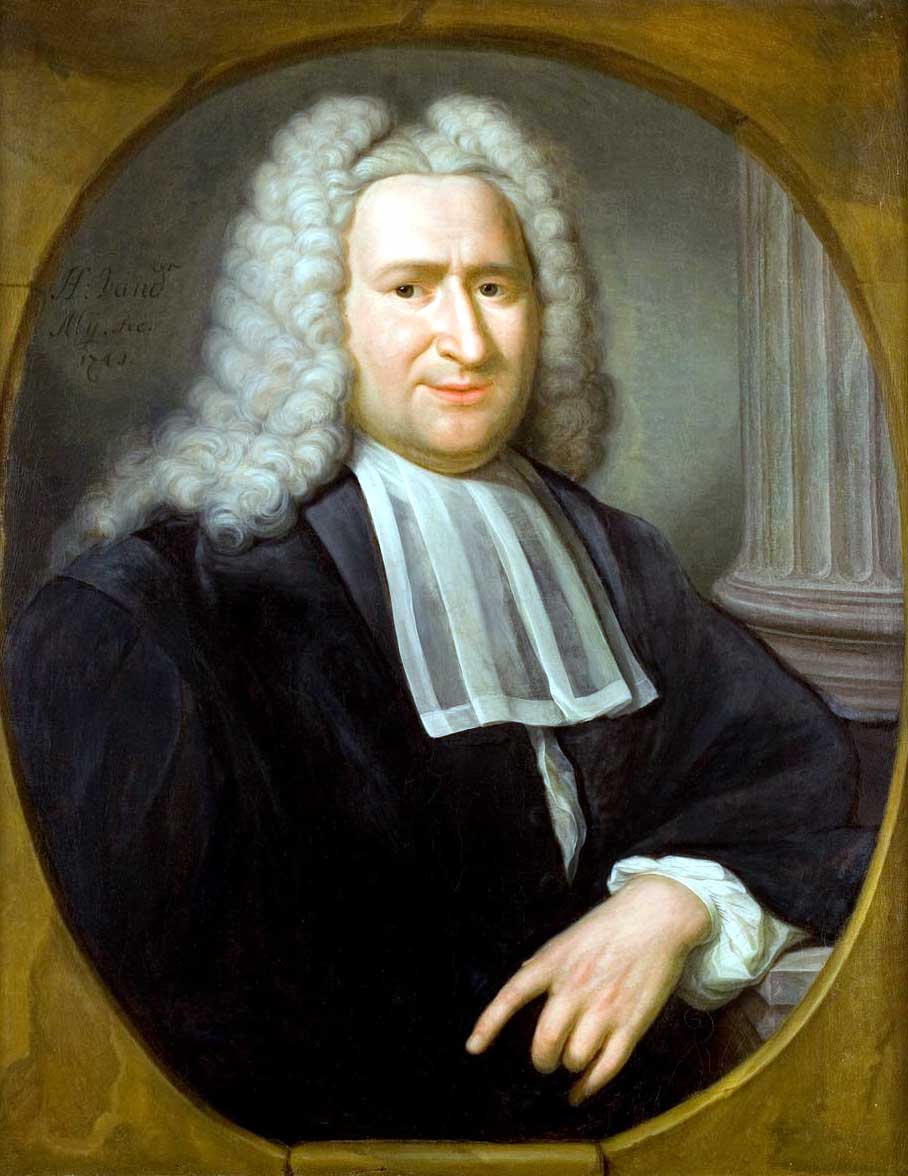
Public Domain
Back to archive
Full disclosure, I may occasionally borrow a sentence from Will Durant's Story of Civilization. I absolutely love that collection!