

Charlemagne
In 771, after the death of his brother, Charlemagne became sole king of the region of Francia at 29. By the end of his life, this so-called "greatest of medieval kings", ruled over all the peoples between the Vistula and the Atlantic, between the Baltic and the Pyrenees—with nearly all of Italy and much of the Balkans. Some of the key moments that allowed him to reach this height of power included: he heeded please for help from Pope Hadrian II, effectively making Charlemagne the protector of the church in 773, he assisted al-Arabi (governor of Barcelona) with military troubles against the caliph of Cordova in 777, he relentlessly pushed back the Saxons and the Avars as the advanced and burned down churches through the 770s and 80s, and he led many other ferocious and often cruel military campaigns—including one where he had 4500 Saxon rebels beheaded in a single day! But Charlemagne was not just a conqueror, he was an avid administrator. His legislative acts known as Capitulare were widely appraised by the multitudes, he punished corruption, gave local governments autonomy and accountability, produced a document similar to the Magna Carta (four centuries before the Magna Carta), established a system of "jurata" which would become the jury system of modern times, he taxed and regulated avidly, supported education (including his own) with the same energy as his military campaigns, and he gave the four winds the names they bear today. But his most consequential political move was to be named Emperor of the Eastern Roman Empire, which after much negotiation entered into a peaceful division of land and authority with Byzantium. The consequences of this coronation lasted for a thousand years!
All-in-all, barring his wars, Charlemagne's was the most just and enlightened government that Europe had known since Theodoric the Goth. He died of pleurisy in the forty-seventh year of his reign and the seventy-second year of his life (814) after crowning his only surviving son (of eighteen children). Most of his successors were administratively inept and utterly helpless against the impending plunder that was to come from the North; their cognomens tell the story: Louis the Pious, Charles the Bald, Louis the Stammerer, Charles the Fat, Charles the Simple... One man, one lifetime, had not availed to establish a new civilization.
Source: Durant, Will, 1885-1981, The Age of Faith: A History of Medieval Civilization, Christian, Islamic, and Judaic, From Constantine to Dante, A.D. 325-1300. Simon and Schuster, 1950.
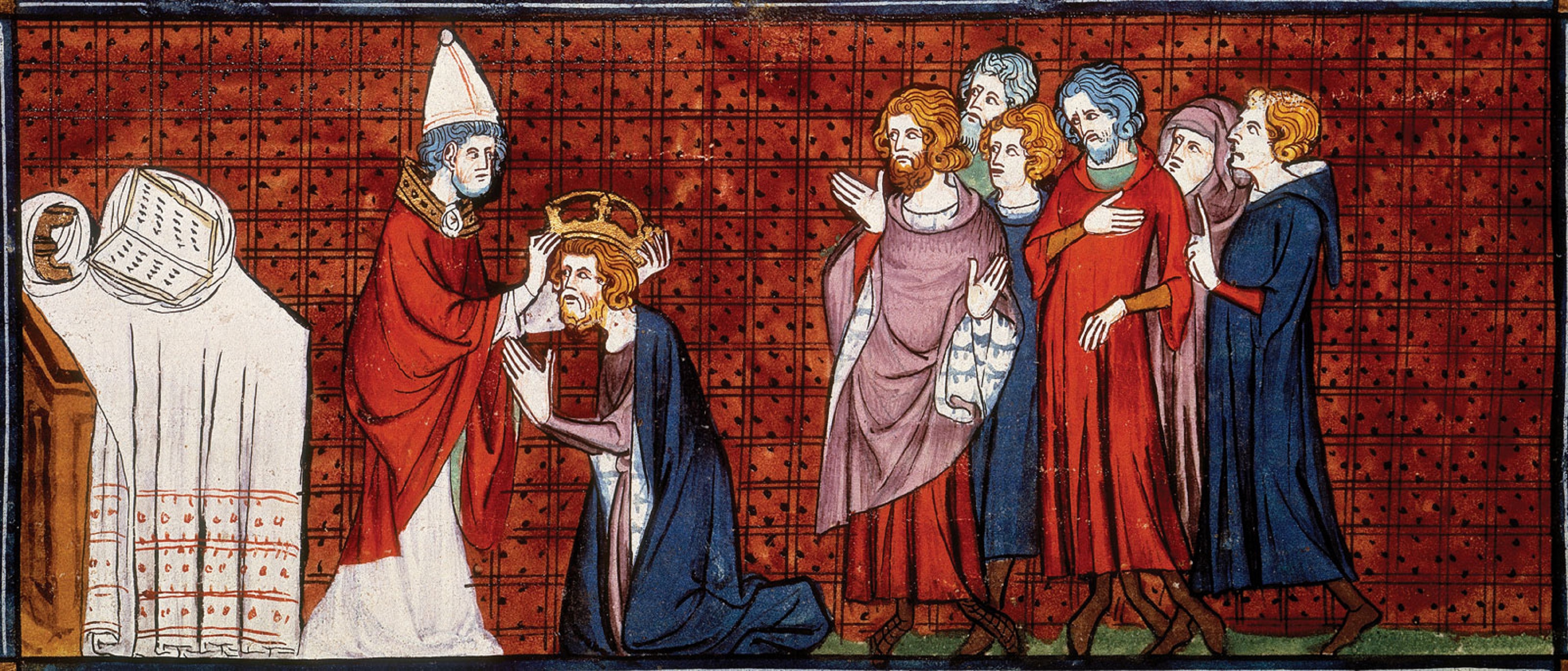
Public Domain
Back to archive
Full disclosure, I may occasionally borrow a sentence from Will Durant's Story of Civilization. I absolutely love that collection!