

Chandragupta Maurya
Around 324 BCE Chandragupta Maurya, the first great king of India, rose to power after all traces of Macedonian authority from Alexander's conquest had disappeared from India. He is one of the most romantic figures in Indian history; a lesser warrior but a greater ruler than Alexander. With the help of his subtle Machiavellian adviser, Kautilya Chanakya, they declared India free after a small army overcame the Macedonian garrisons—and over the years reached an organization in India that exceeded even those of the great Greek cities. Their government was organized into departments with well defined duties and a carefully graded hierarchy of officials, managing respectively revenue, customs, frontiers, passports, communications, excise, mines, agriculture, cattle, commerce, warehouses, navigation, forests, public games, prostitution, and the mint—each accomplishing deeds that would astonish cabinet members of the best democracies of today. Law was administered in the village by local headmen, in towns, districts and provinces by inferior courts, in the capital by superior courts, and at the very top by the King. The daily life of Chandragupta himself was carried out with equal discipline, dividing his days into sixteen periods of ninety minutes each: (1) meditation and study, (2) issuing secret instructions, (3) meeting with his council, (4) attending state finances, (5) bath and breakfast, (6) reading religious texts, (7) receiving taxes and tribute, (8) meeting with his council again, (9) relaxation and prayer, (10,11) attending military matters, (12) issuing secret instructions again, (13) bath and dinner, (14,15, and 16) sleeping. Good governance starts at home! The one defect of this government was autocracy, and therefore continual dependence upon force and spies. Like every autocrat, Chandragupta held his power precariously, always fearing revolt and assassination. Every night he used a different bedroom, and was always surrounded by guards. Hindu tradition, tells how, when a long famine came upon his kingdom, Chandragupta, in despair at his helplessness, abdicated his throne, lived for twelve years thereafter as a Jain ascetic, and then starved himself to death. “All things considered,” said Voltaire, “the life of a gondolier is preferable to that of a doge; but I believe the difference is so trifling that it is not worth the trouble of examining.”
Source: Durant, Will, 1885-1981, Our Oriental Heritage. Volume I: Our Oriental Heritage Simon and Schuster, 1935.
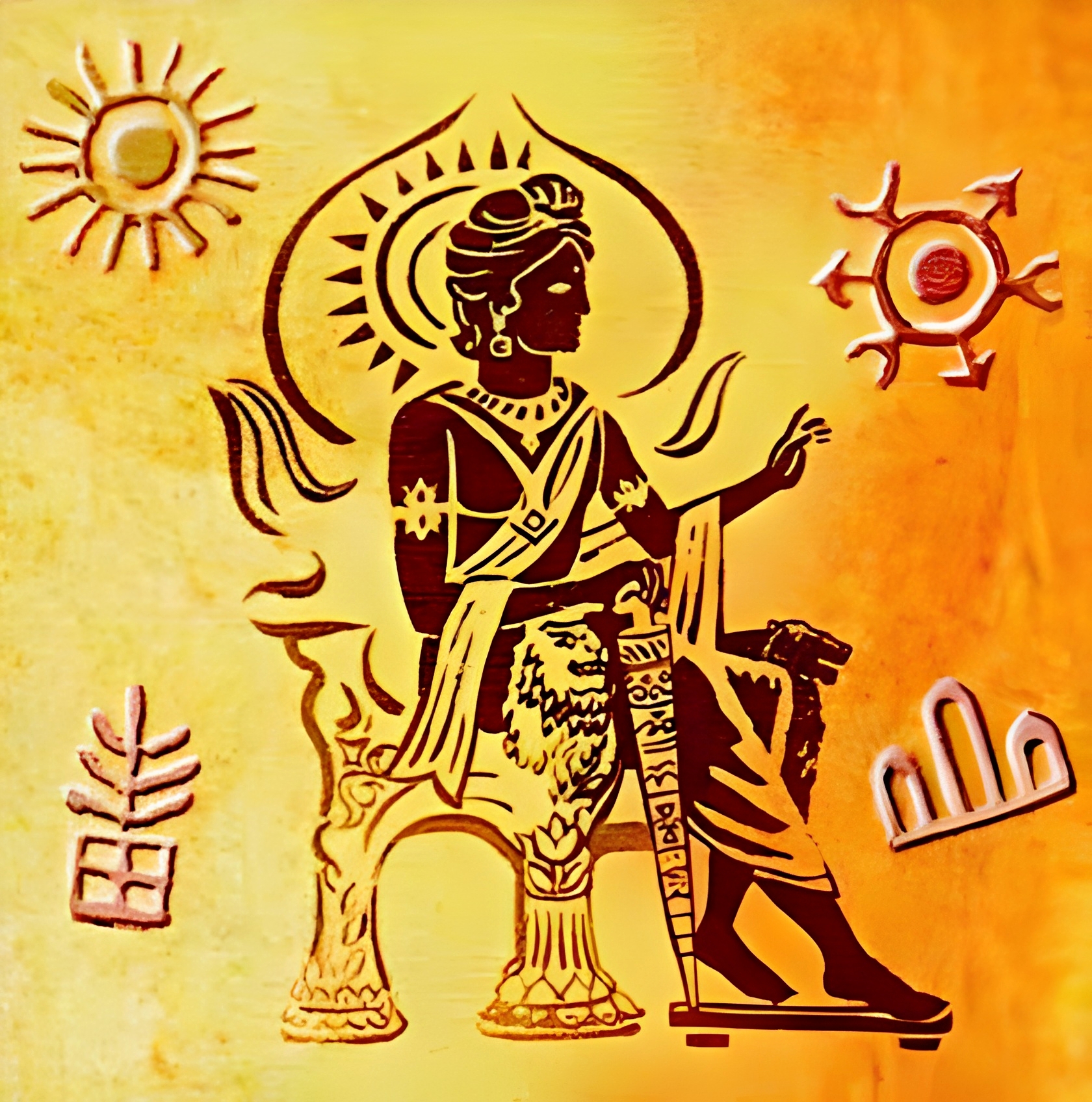
Image under the Government Open Data License - India (GODL)
Back to archive
Full disclosure, I may occasionally borrow a sentence from Will Durant's Story of Civilization. I absolutely love that collection!