

Minoan civilization
Around 1400 BCE, the City of Knossos in Crete reached its zenith. Known as the Minoan civilization, Crete was the first link in the two thousand year long chain of civilization that passed through Greece, Rome, and survived the middle ages to become the Europe of today. But Crete was no mere “humble beginnings”, some of the ruins show structures comparable to those described in Homeric Greece. Its art and architecture rivaled Periclean Athens and exceeded most cities in the first millennium CE. Among its cultural heritage we have the palace of Minos, discovered in 1839 by doctor Arthur Evans. In it, Evans found a complicated structure resembling the famous tales of an endless labyrinth and the Minotaur. The modern world had assumed until then that this was a mythology of proper Greece. Magnificent as it was, this chain also goes back thousands of years through the cultures of the East. The stone vases of MochIos and the copper weapons of early Minoan period are strikingly like those found in Proto-Dynastic tombs; the double ax (represented in Crete as the Labrys) appears as an amulet in Egypt; not to mention the magnificent columns of Egyptian temples that are so ubiquitous ever since. Furthermore, the worship of the bull in Crete appears to have been adopted from Phrygian culture, and their myth of the “Mother” giving birth to Nature is but a recycled myth that appears as Isis in Egypt, Ishtar in Babylon, Demeter in Greece, Cybele in Phrygia, etc. Finally, the alphabet, its most important contribution to Europe, had also been imported (perhaps from Phoenicia). Hence, the fascinating thing about Crete is that it appears to be a bottleneck—an inn at the crossroads (if you will)—in the journey of human civilization from the magnificent East to the conquering West. Knossos fell shortly after 1400 BCE, possibly because of a drop in trade after the Egyptian fall of Akhenaten.
Source: Durant, Will, 1885-1981, The Story of Civilization, Vol. 2: The Life of Greece , A history of Greek government, industry, manners, morals, religion, philosophy, science, literature and art from the earliest times to the Roman conquest. Simon and Schuster, 1939.
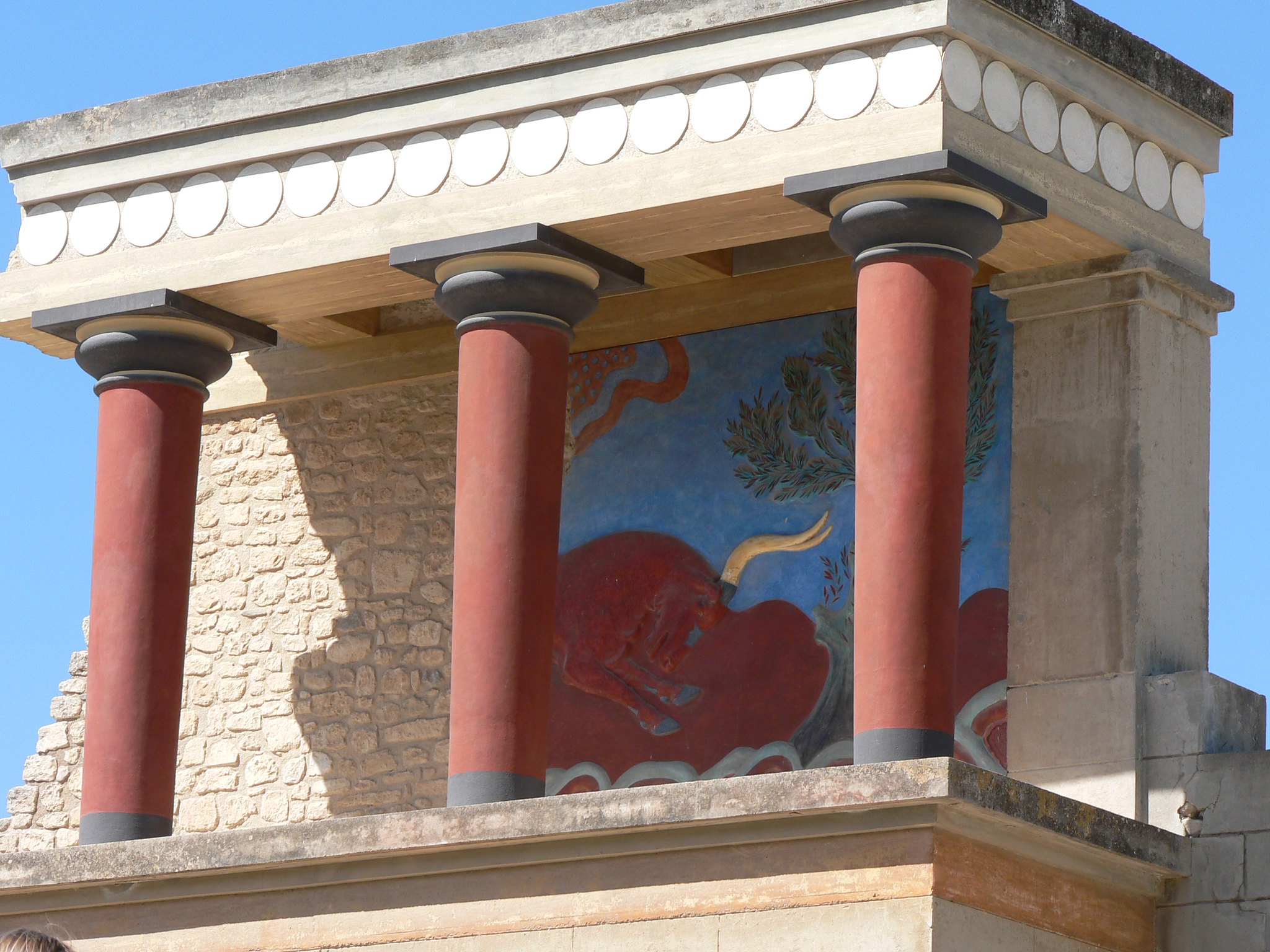
Image by Alistair Young under CC BY 2.0 license
Back to archive
Full disclosure, I may occasionally borrow a sentence from Will Durant's Story of Civilization. I absolutely love that collection!