

Justinian the Great
On November 14th 565, Justinian the Great died. He is remembered for his Corpus Juris Civilis (aka the Code of Justinian) and for building the Hagia Sophia. But what made him "The Great" was not his law code, it was his victories—brought forth by his avid general Belisarius who joined him in the dream of restoring the glory of the empire. Some of their most notable triumphs include the suppression of the “Nika” revolt, the war and peace against Persia, the overthrow of the Vandal power in Carthage, the conquest of Ostrogothic Italy (and the civil war that followed), and many more. No general since Caesar ever won so many victories with such limited resources of men and funds as Belisarius. Through him, Justinian doubled the extent of his reign and brought an age of wealth, art, science, and philosophy from Constantinople to Ravenna. The empire seemed poised to regain the glory of the days of Constantine or Augustus, but at sixty-five, weakened by asceticism and recurrent crises; the emperor left the government to subordinates, neglected the defenses he had so labored to build, and abandoned himself to theology. It was an unfortunate closing of a chapter in history; a hundred disasters darkened these remaining seventeen years during which he outlived himself: devastating earthquakes, two plagues, and a Hun invasion that called for Belisarius, old and feeble, to put on his armor one last time. The Huns were repelled, but the populace at the capital complained that Belisarius had not pursued the enemy and brought back the Hun leader as captive. The jealous Emperor listened to envious calumnies against his general, suspected him of conspiracy, and ordered him to dismiss his armed retainers. With a broken spirit, Belisarius died, and the repentant emperor followed him to the grave eight months later. Within a century after Justinian's death, the Empire had lost more territory than he had gained; the Western Empire faded completely, and The Eastern Byzantine Empire entered its long decline. The glory of Rome had now fully disappeared from the world; with it, Justinian and Belisarius became the last of the Romans.
Source: Durant, Will. The Story of Civilization, Vol. 4: The Age of Faith, A History of Medieval Civilization, Christian, Islamic, and Judaic, From Constantine to Dante, A.D. 325-1300. New York: Simon and Schuster, 1950.
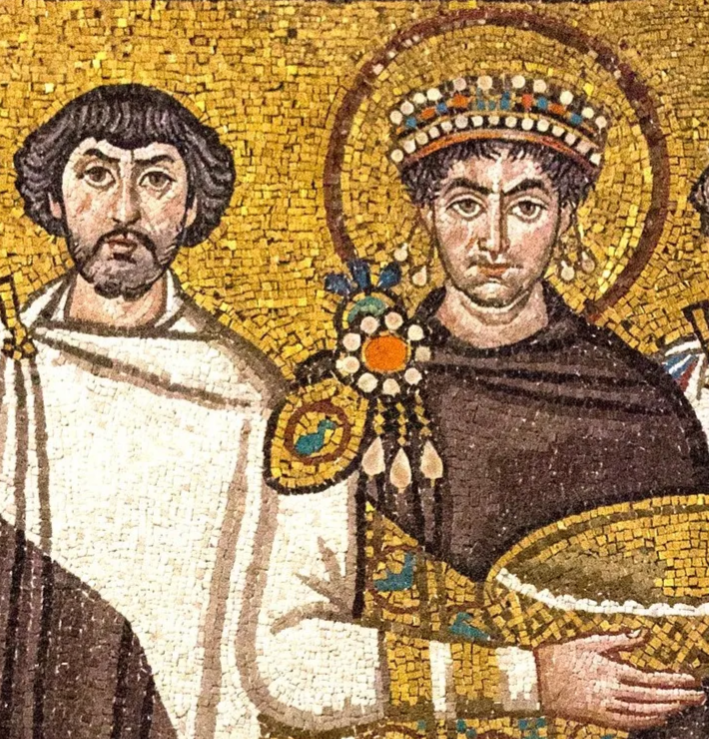
Public Domain
Back to archive
Full disclosure, I may occasionally borrow a sentence from Will Durant's Story of Civilization. I absolutely love that collection!