

Insulators and Conductors
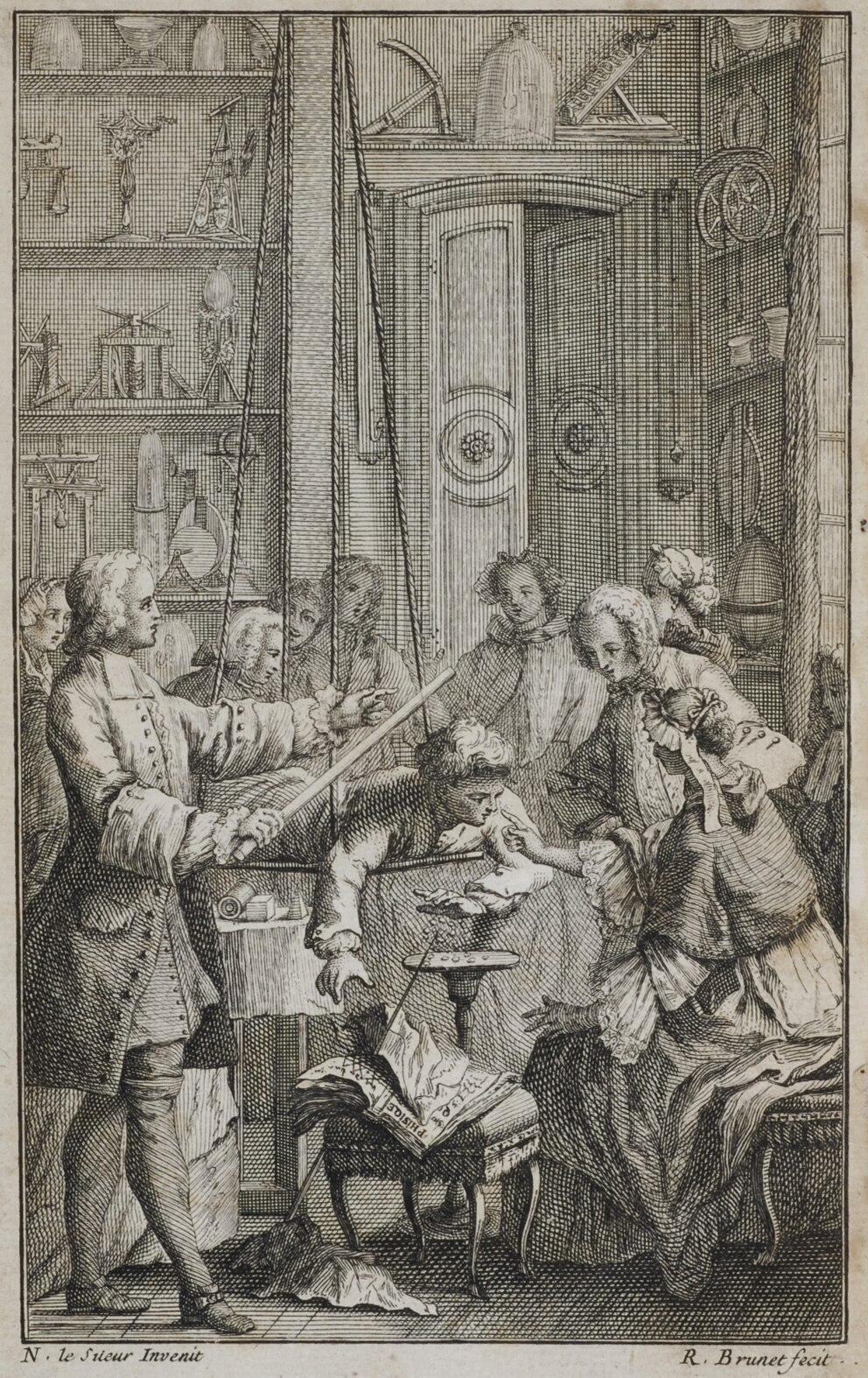
In the 1720s, a crippling accident landed Stephen Gray in Charter House, a home for orphans and elderly gentlemen. Prior to his accident, Gray was a silk dyer, and the sparks of static electricity that he would occasionally see in the silk fascinated him. Now at Charter House, with more time on his hands, he set out to explore this phenomenon. By 1730, he had coined the terms ‘insulators’ and ‘conductors’. He used the terms to describe his famous swing: an entertaining display of static electricity in which a child was floated on a swing hanging with silk ropes (insulators) and charged with static electricity using a Hauksbee sphere. The child would then reach his hand down to some gold-leaf (conductors) and amaze the audience as they leapt to the boy’s fingers and occasionally sparked. Grey understood then that electricity could 'move'; from the sphere, to the boy, to the gold-leaf—but the silk rope stopped it dead.
Source: Shock and Awe: The Story of Electricity. Presented by Jim Al-Khalili, BBC, 2015.
Public domain
Back to archive
Full disclosure, I may occasionally borrow a sentence from Will Durant's Story of Civilization. I absolutely love that collection!