

The Synchrotron
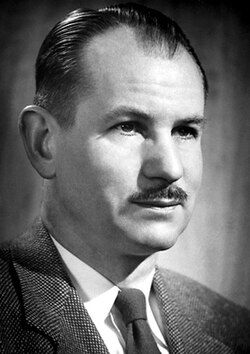
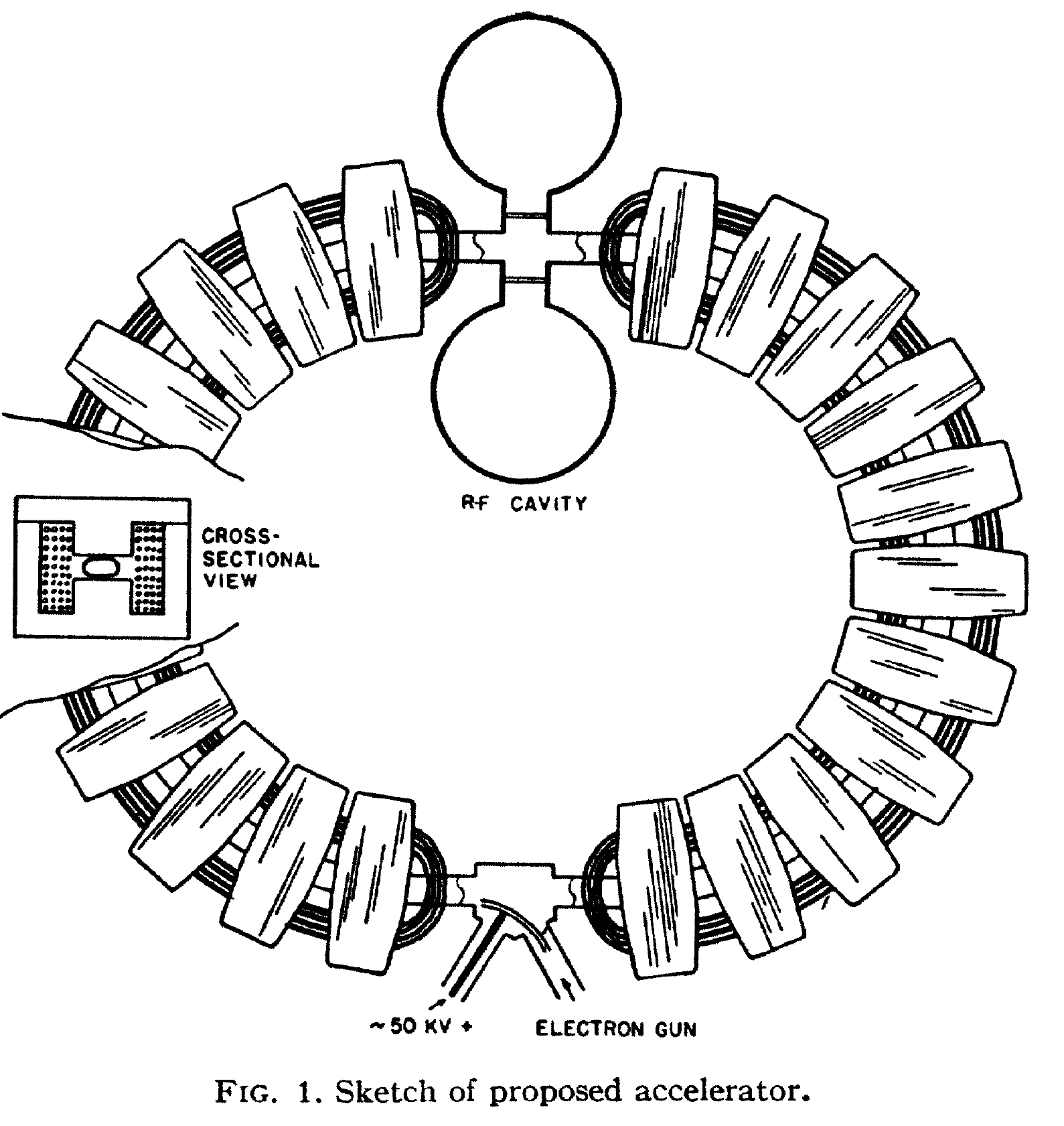
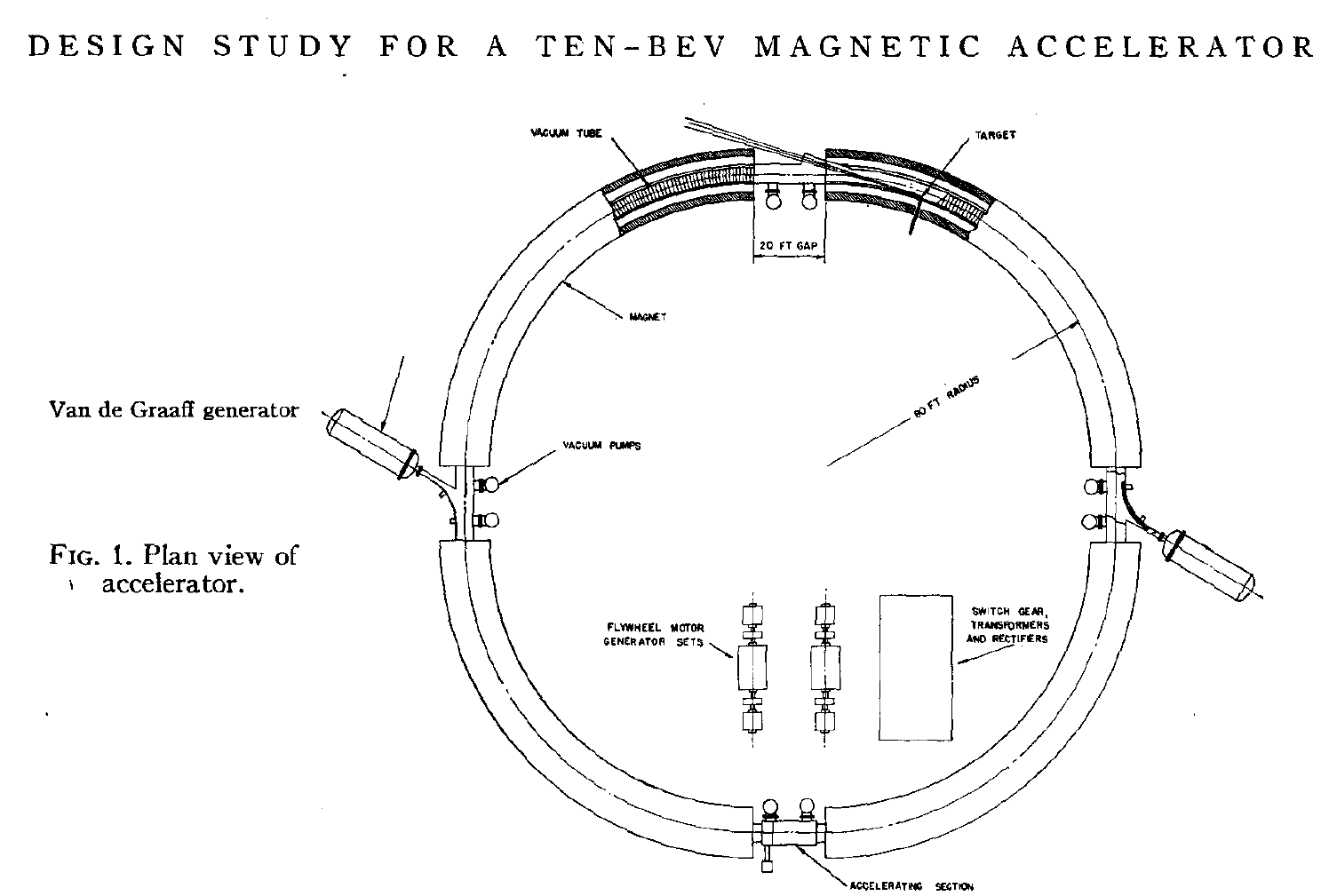
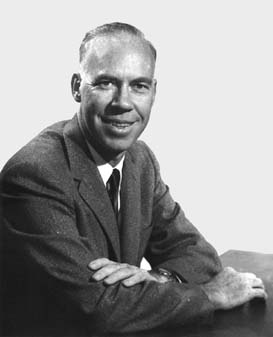
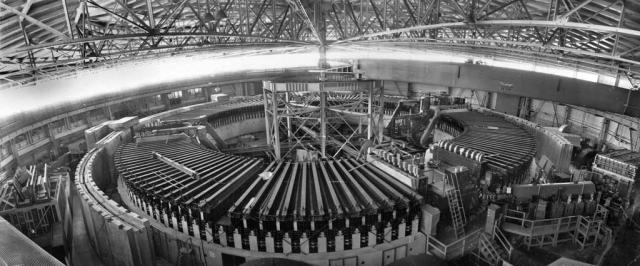
The Synchrotron was proposed by Edwin McMillan on September 1, 1945. In combination with the principle of the synchronous motor (hence its name), the synchrotron uses a doughnut shaped vacuum chamber with a varying magnetic field engineered to match (i.e. to be synchronized with) the angular velocity of the particles. The idea required a complex synchronization of the linear acceleration from the electric field and the centripetal acceleration of the magnetic field at the same time. This was solved rather simplistically the following year by Horace Richard Crane who proposed having a couple of semicircular sections solely responsible for the centripetal acceleration and a couple of straight sections solely responsible for the linear acceleration. Crane adequately called this “The Racetrack” characterized by its two “straight sections” and its two (later called) “arcs”. In 1948 William Brobeck saw the potential of this technology, pointing out that “The maximum obtainable energy…appears to be limited only by engineering capabilities”, an affirmation that seems to be true even to this day. Brobeck also made a remarkable prediction when he said that similar machines would be built in the future without “departing from the techniques used on machines at present in operation.” Once again, he was right: from the Bevatron (a four sided “race-track”) to the LHC (an octagon), every synchrotron has been built on the same basic principle.
Source:
1) McMillan, E. M. The Synchrotron—A Proposed High Energy Particle Accelerator. Phys. Rev. 68, 143–144 (1945).
2) Brobeck, W. Design Study for a Ten‐Bev Magnetic Accelerator. Review of Scientific Instruments 19, 545–551 (1948).
Back to archive
Full disclosure, I may occasionally borrow a sentence from Will Durant's Story of Civilization. I absolutely love that collection!