

Newton's Optiks
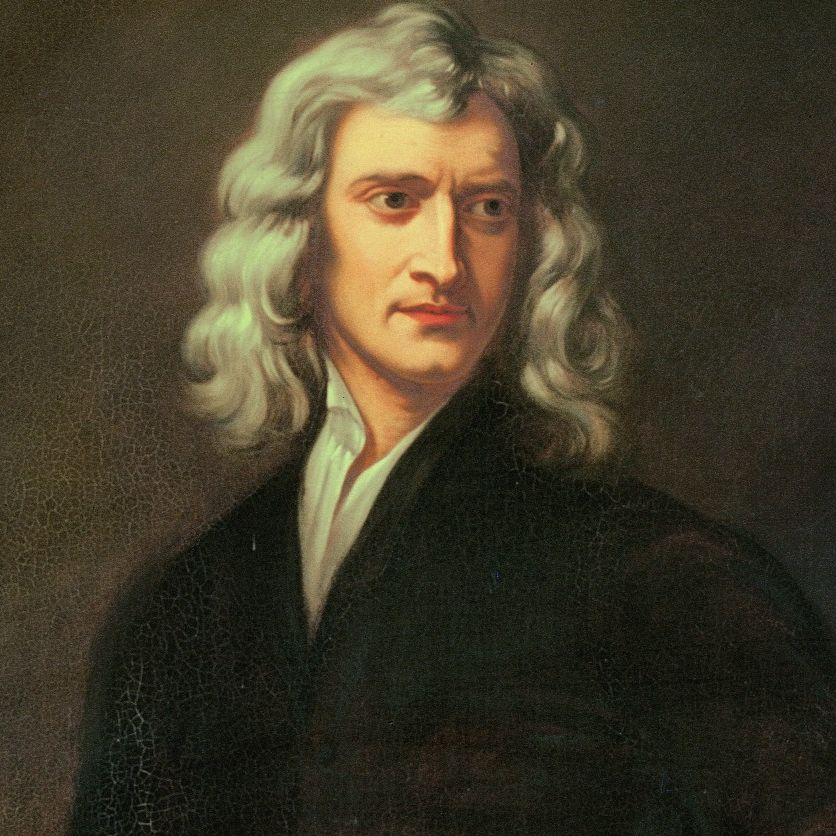
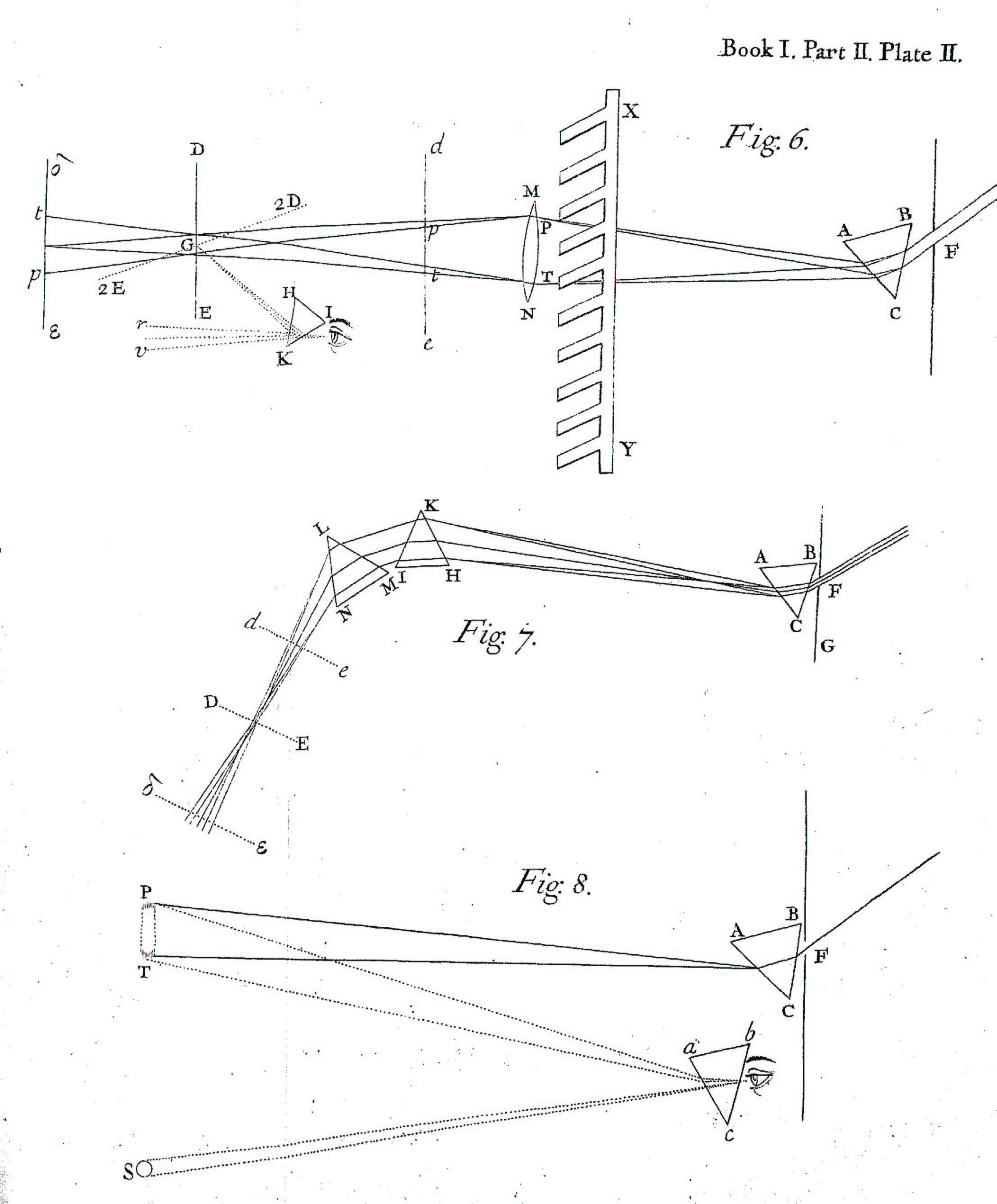
In 1704, Isaac Newton published his revolutionary treatise ‘Optiks’. In the first book he explains the nature of light as established by antiquity and makes a deep dive into the composition of its colors. One of the most exciting experiments in the book is his ‘Experiment 10’ (see Fig 6 attached), in which he shows that light can not only be split into various colors, but that it can also be recombined back into white. Furthermore, describes what happens when the recombined light is deprived of one of the colors: “the whiteness will cease and degenerate into that Colour which ariseth from the composition of the other colours which are not intercepted”. The second book is less consequential; it deals with the curiosities of light in thin films and fluids. The third book starts by looking at shadows and their diffused nature; slowly stepping into shaky ground; speculating—perhaps reminiscing on his laws of motion—that there must be an attractive force between light and the objects. The book ends with a series of eyebrow-raising questions (to the modern eye) which often have little to do with light and are increasingly more cringy. The second to last question is surprisingly prophetic though: “Are not gross Bodies and Light convertible into one another?” We, and his visionary reputation, are better off by ignoring the reasoning behind his question, let’s just say he claims that nature can be unpredictable at times. Unfortunately, the last few pages are characteristic of the religiosity of the times*—and add little to the scientific genius that was Book I. Alas, as Goethe once said “A man's shortcomings are taken from his epoch; his virtues and greatness belong to himself”
*On the very last paragraph of Book III, Newton writes: "…no doubt, if the worship of false Gods had not blinded the Heathen, their moral philosophy would have gone farther than to the four Cardinal Virtues; and instead of teaching the Transmigration of Souls, and to worship the Sun and Moon, and dead Heroes, they would have taught us to worship our true Author and Benefactor, as their Ancestors did under the Government of Noah and his Sons before they corrupted themselves."
Source: Isaac Newton Opticks, a Treatise of the Reflexions, Refractions, Inflections and Colours of Light, 1704
Public Domain
Back to archive
Full disclosure, I may occasionally borrow a sentence from Will Durant's Story of Civilization. I absolutely love that collection!